Many Florida homeowners notice dark stains, green buildup, or black spots developing on their siding and wonder whether they are simply cosmetic issues or something more serious. A common concern is understanding the true mold and mildew on house health risks and whether exterior growth can affect the health of your family.
The answer depends on the type of growth, the severity of the contamination, and how long it has been allowed to spread.
While not every patch of exterior discoloration poses an immediate health threat, mold and mildew can contribute to poor environmental conditions around your home. In Florida’s humid climate, these issues tend to grow much faster than in many other parts of the country.
For homeowners throughout Brevard County and Volusia County, including Melbourne, Palm Bay, Titusville, Cocoa Beach, Daytona Beach, Port Orange, and New Smyrna Beach, understanding mold and mildew on house health riskscan help protect both your property and your family.
If your home already has visible buildup, learn more about our professional house washing services:
If you are new to exterior cleaning, start here:
What Is the Difference Between Mold and Mildew?
Before discussing mold and mildew on house health risks, it helps to understand the difference between mold and mildew.
Mildew is generally a surface-level fungal growth that appears:
- Gray
- White
- Yellow
- Light black
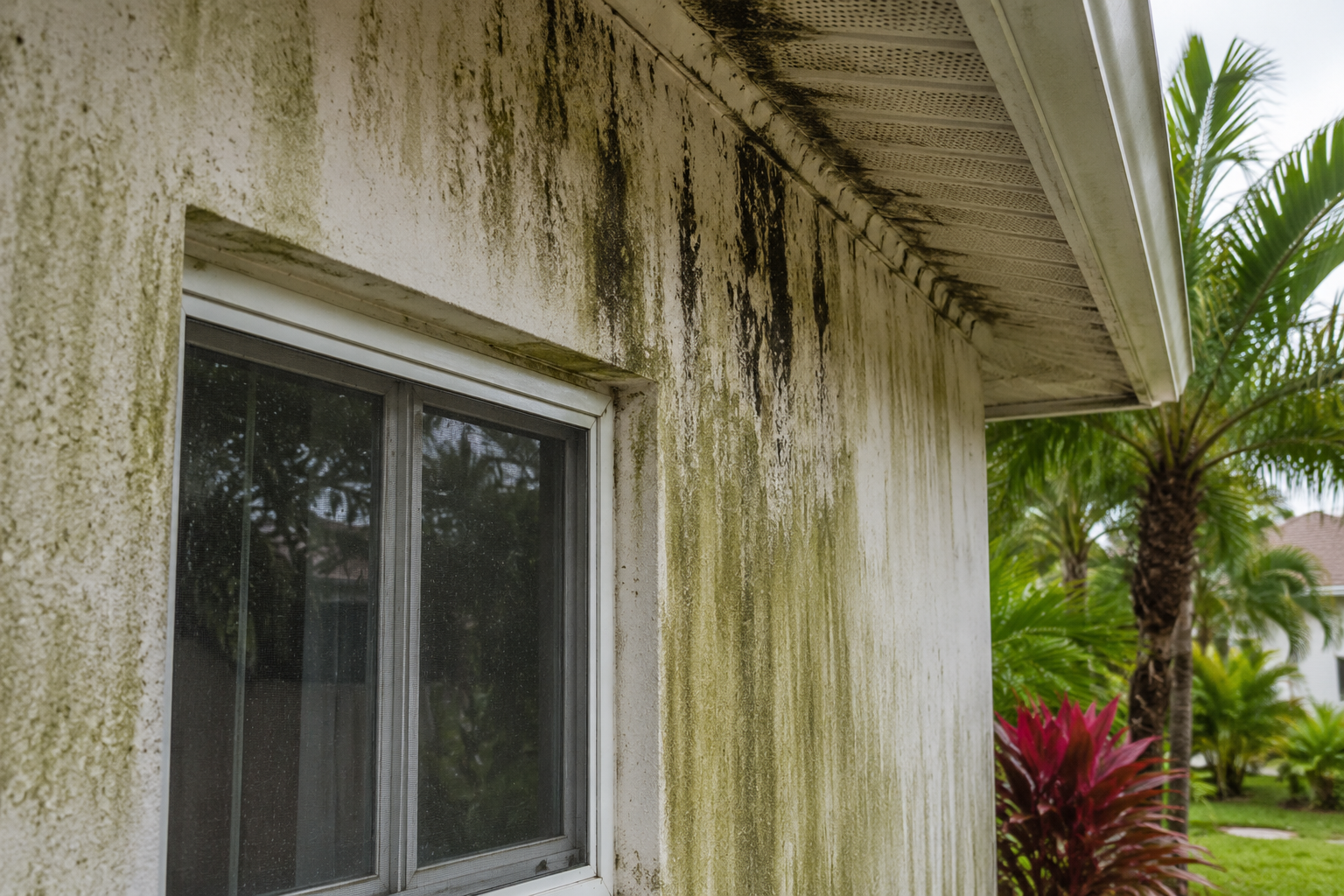
Mold tends to be more aggressive and may appear:
- Black
- Dark green
- Brown
- Deep gray
Both thrive in moist environments and often develop in areas that receive limited sunlight.
Florida’s warm temperatures and frequent rainfall create ideal conditions for both mold and mildew to grow on exterior surfaces.
According to the Centers for Disease Control and Prevention (CDC), mold grows anywhere moisture and organic material are present.
Source:
https://www.cdc.gov/mold-health/about/index.html
Why Florida Homes Are More Vulnerable
One reason homeowners frequently research mold and mildew on house health risks is because Florida homes face unique environmental challenges.
The combination of:
- High humidity
- Frequent rainfall
- Warm temperatures
- Tropical weather patterns
- Coastal moisture
creates ideal conditions for biological growth.
Homes near the coast in areas such as Satellite Beach, Cocoa Beach, Ormond Beach, and New Smyrna Beach often experience even greater exposure to moisture.
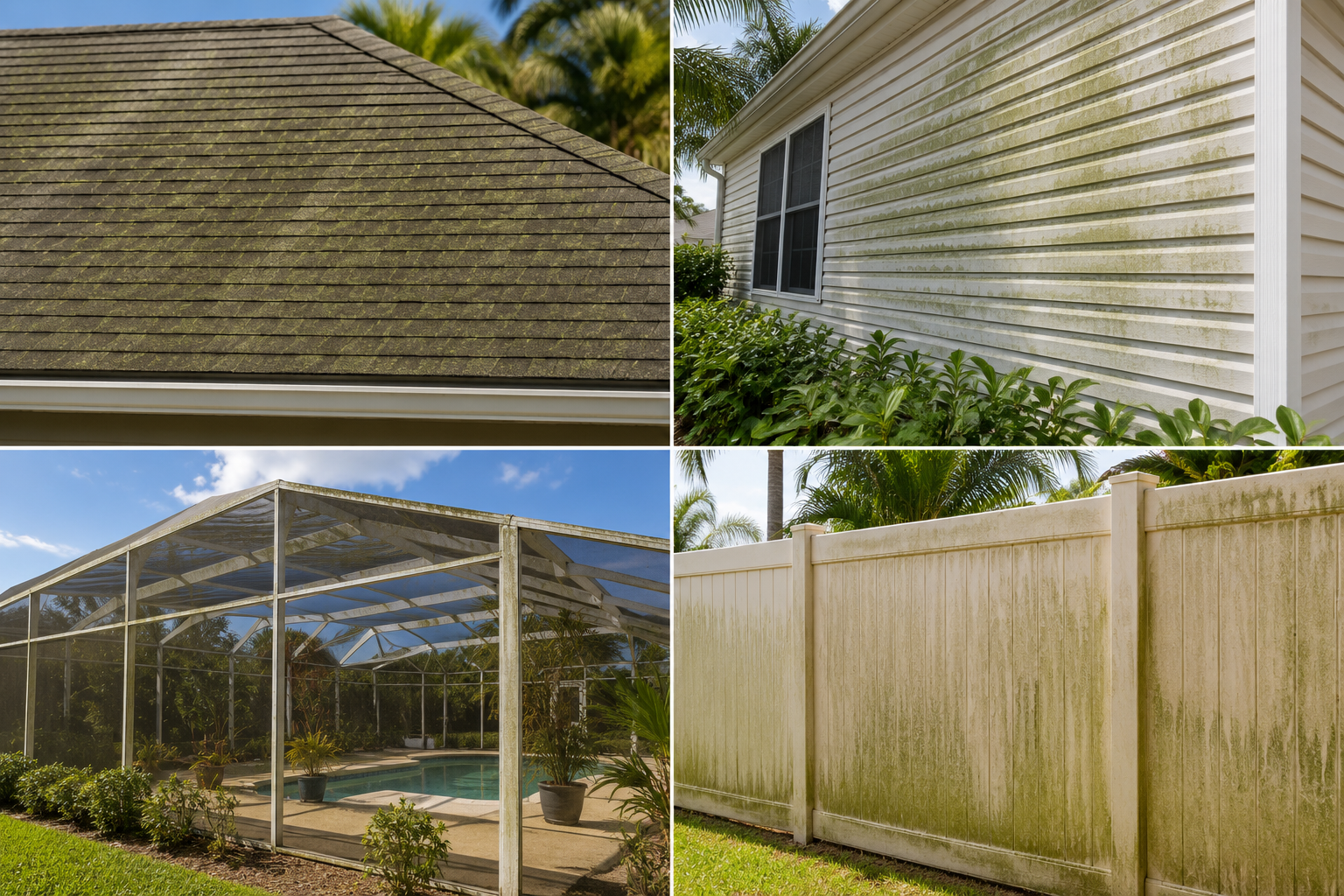
This allows mold, mildew, and algae to spread rapidly on:
- Siding
- Soffits
- Fascia
- Pool enclosures
- Fences
- Roofing systems
Can Exterior Mold and Mildew Make You Sick?
One of the most common questions homeowners ask about mold and mildew on house health risks is whether exterior mold can actually affect their health.
According to the CDC and EPA, exposure to mold may contribute to symptoms such as:
- Sneezing
- Nasal congestion
- Eye irritation
- Throat irritation
- Coughing
- Skin irritation
Individuals with asthma, allergies, or respiratory conditions may be more sensitive to mold exposure.
Source:
https://www.cdc.gov/mold-health/about/index.html
Source:
https://www.epa.gov/mold
While most exterior mold remains outside the home, heavy growth around windows, doors, soffits, vents, and other openings can increase opportunities for spores to enter indoor spaces.
This is one reason many homeowners take mold and mildew on house health risks seriously.
Mold and Mildew Often Grow Together With Algae
One of the biggest misconceptions surrounding mold and mildew on house health risks is assuming all green or black staining is mold.
In reality, many Florida homes develop a combination of:
- Algae
- Mold
- Mildew
- Bacteria
- Organic debris
Algae are often responsible for green staining, while mold and mildew may be present in the same areas due to moisture retention.
If you’ve noticed green growth on your siding, read:
You may also find this helpful:
What Happens If Mold and Mildew Are Ignored?
Understanding mold and mildew on house health risks also means understanding what happens when these issues are left untreated.
Over time, mold and mildew can:
- Spread across siding
- Create permanent staining
- Trap moisture against surfaces
- Contribute to exterior deterioration
- Increase maintenance costs
The longer biological growth remains on your home, the more difficult it typically becomes to remove.
This is one reason regular exterior cleaning is recommended throughout Florida.
Learn more here:
Which Areas of a Home Are Most Susceptible?
Certain areas of a property are far more likely to develop mold and mildew.
Common problem areas include:
- North-facing walls
- Shaded siding
- Under gutters
- Around soffits
- Pool enclosures
- Fence lines
- Areas behind landscaping
These locations often remain damp longer, creating ideal conditions for biological growth.
Why Pressure Washing Is Not Always the Best Solution
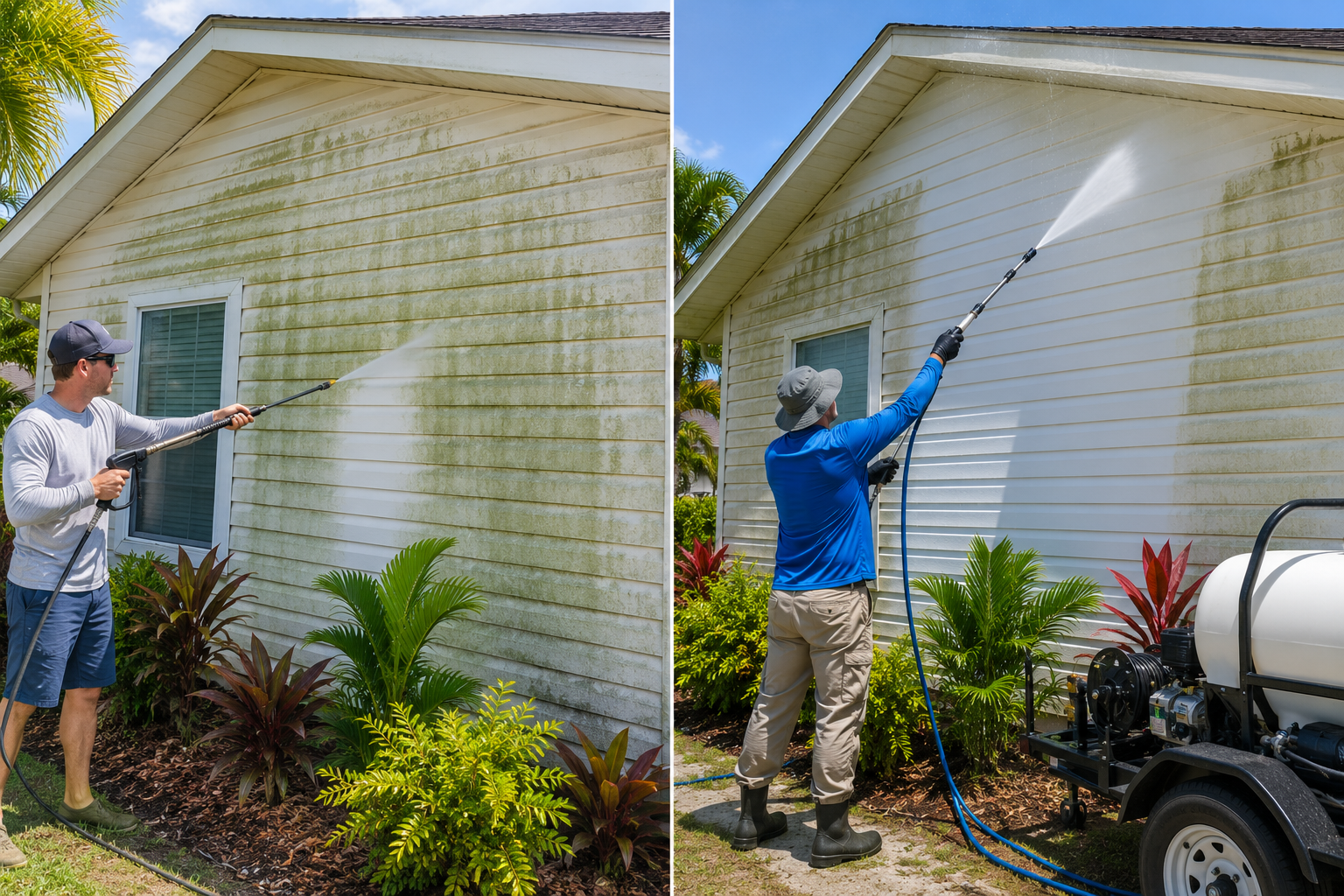
Many homeowners attempt to remove mold and mildew themselves using pressure washers.
Unfortunately, high-pressure cleaning can sometimes:
- Damage siding
- Force water behind panels
- Leave mold spores behind
- Increase moisture problems
This is why many professional cleaning companies recommend soft washing instead.
Learn more here:
You may also want to read:
How Soft Washing Helps Eliminate Mold and Mildew
One reason soft washing has become so popular is its ability to address mold and mildew on house health risks at the source.
Soft washing uses:
- Low-pressure water
- Specialized cleaning solutions
- Biological growth treatments
Unlike pressure washing alone, soft washing helps eliminate mold and mildew rather than simply removing visible staining.
Benefits include:
- Longer-lasting results
- Reduced regrowth
- Safer cleaning
- Better protection for exterior surfaces
What Do Industry Experts Say?
According to the EPA, mold should be addressed promptly because moisture-related growth can continue spreading if conditions remain favorable.
Source:
https://www.epa.gov/mold
According to the CDC, mold exposure may cause irritation and allergic reactions in sensitive individuals.
Source:
https://www.cdc.gov/mold-health/about/index.html
The University of Florida IFAS Extension also notes that Florida’s climate creates ideal conditions for fungal and biological growth on exterior surfaces.
Source:
https://edis.ifas.ufl.edu
These findings help explain why regular exterior maintenance is important for Florida homeowners.
Protect Your Home From Mold and Mildew Growth
Understanding mold and mildew on house health risks is important for both your property and your family.
While not every patch of discoloration is dangerous, allowing mold and mildew to spread can lead to:
- Greater staining
- Increased moisture retention
- More difficult cleaning
- Potential health concerns for sensitive individuals
Routine house washing helps remove biological growth before it becomes a larger problem.
If your home is already showing signs of mold, mildew, algae, or organic staining, professional soft washing can safely restore your exterior.
Learn more about house washing here:
Explore all of our exterior cleaning services:
FAQ
What are mold and mildew on house health risks?
Mold and mildew on house health risks may include allergic reactions, respiratory irritation, coughing, sneezing, and eye irritation in sensitive individuals.
Can mold on the outside of a house affect indoor air quality?
In some cases, heavy exterior mold growth near openings may contribute to spores entering indoor spaces.
Does mildew cause health problems?
Mildew may trigger allergy-like symptoms and irritation in some individuals.
How do you remove mold and mildew from siding?
Professional soft washing is one of the safest and most effective methods for removing mold and mildew from exterior surfaces.
How often should homes be washed in Florida?
Most homes benefit from professional exterior cleaning every 1 to 2 years depending on environmental conditions.
Fore more information on how we can help you with mold and mildew, please visit our Services page.