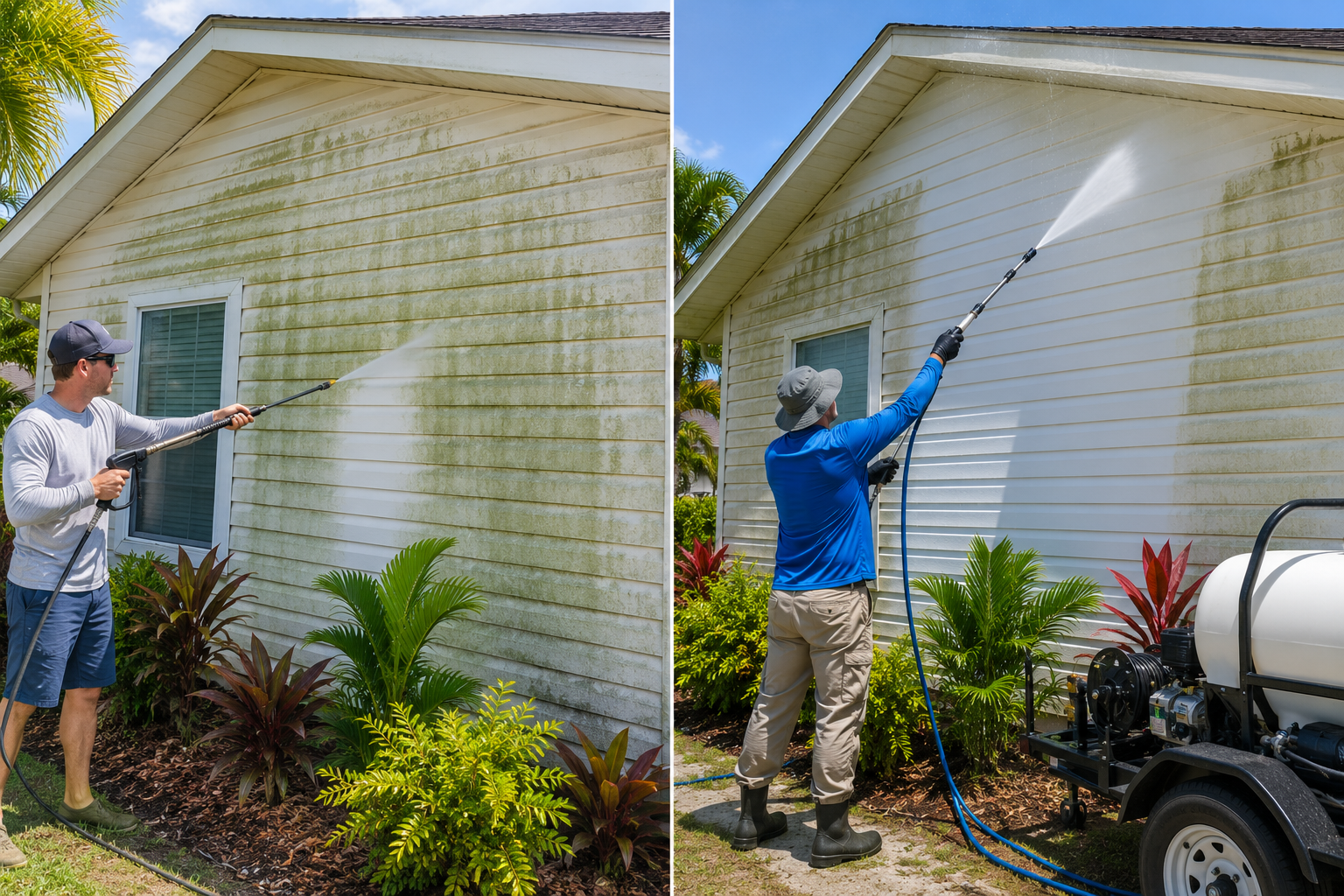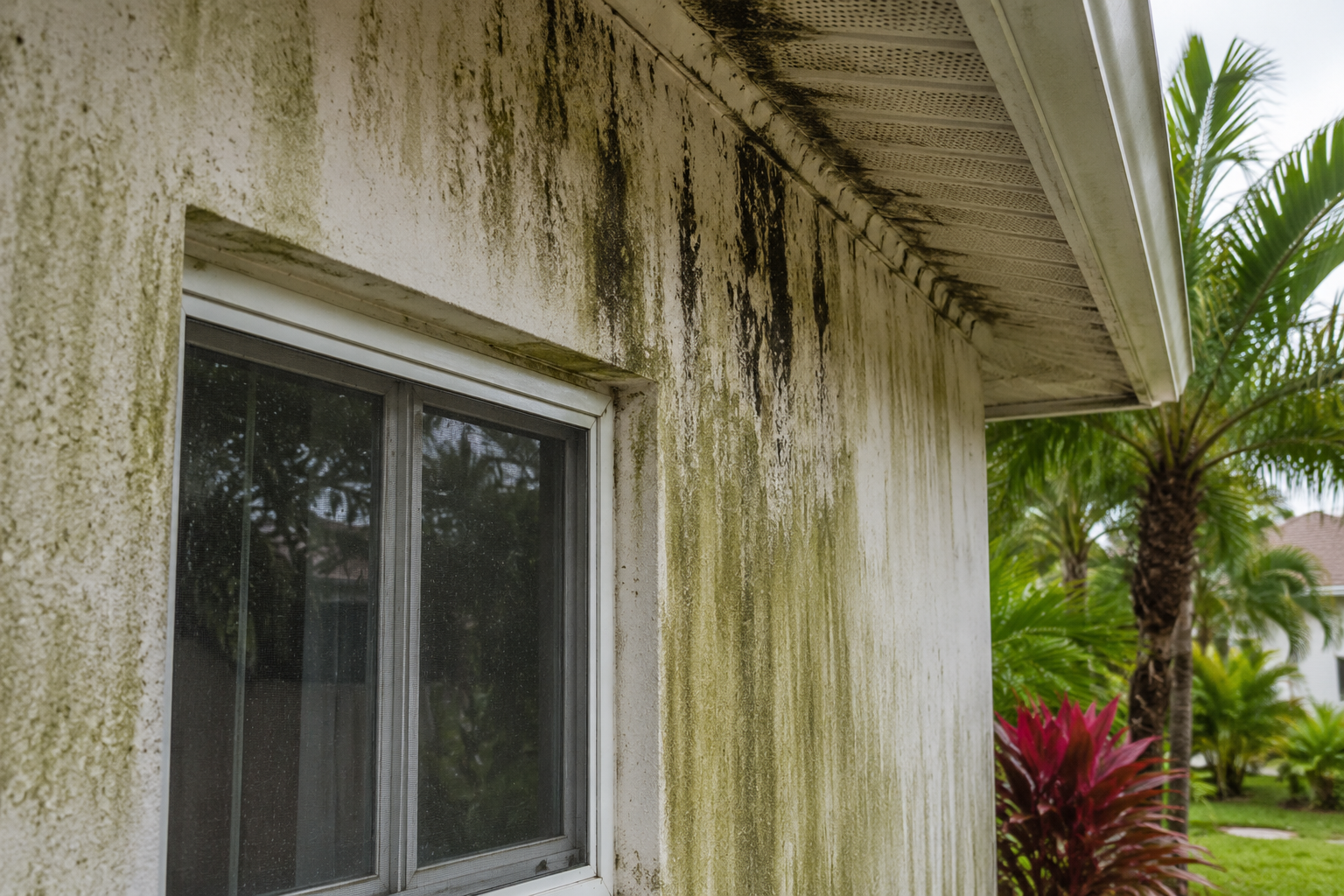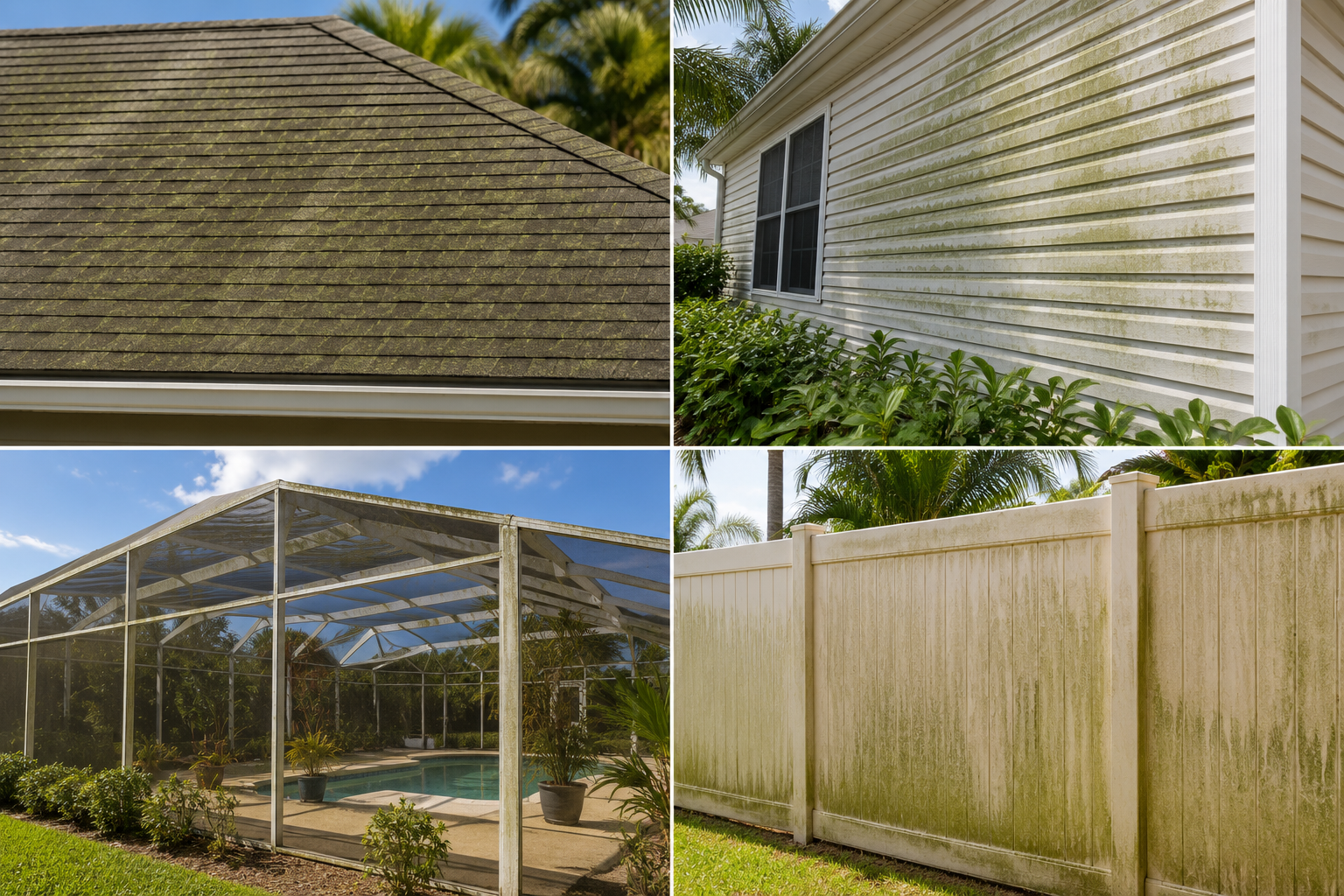
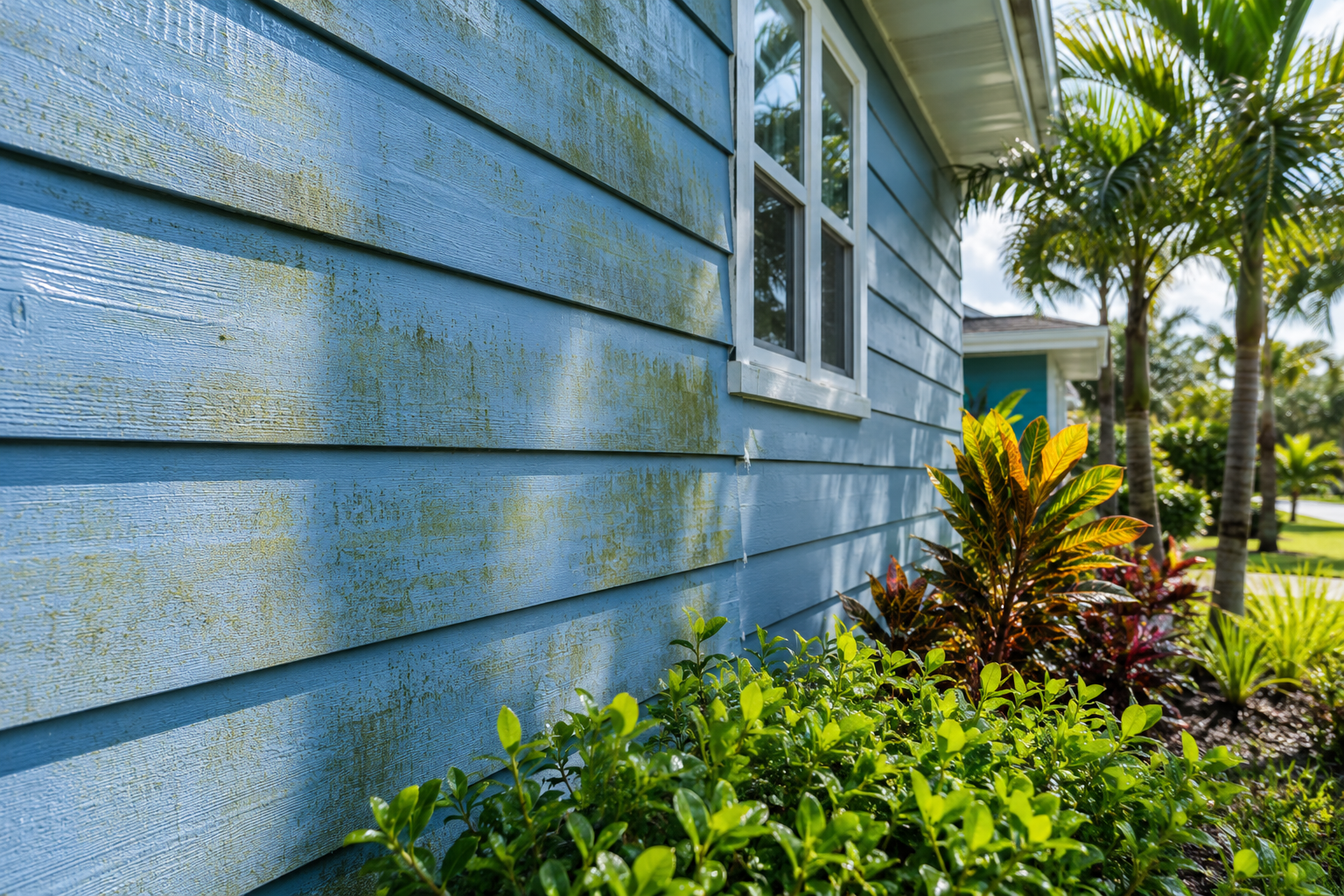
If you’ve noticed green staining spreading across your siding, you’re probably wondering why does my house turn green and whether it is something you should be concerned about.
For homeowners in Florida, this is extremely common. The combination of humidity, heat, rain, and shade creates the perfect environment for algae to grow on exterior surfaces.
Homes across Brevard County and Volusia County, including Melbourne, Palm Bay, Titusville, Daytona Beach, and Port Orange, frequently develop green buildup on siding because moisture remains trapped against the home for long periods of time.
If you are new to exterior cleaning, start here:
https://suncoastsoftwashfl.com/what-is-house-washing/
If your home already has visible buildup, learn more about professional cleaning here:
https://suncoastsoftwashfl.com/house-washing-in-brevard-volusia/
Why Does My House Turn Green on the Siding?
The answer to why does my house turn green is usually algae growth.
This green buildup is often caused by a type of airborne algae that thrives in damp, humid conditions. Once spores land on your siding, they begin feeding on moisture and organic material stuck to the surface.
Over time, the algae spread and become more visible, especially on shaded sides of the home.
This is why many homeowners first notice green staining:
- under gutters
- near landscaping
- on shaded walls
- around areas with poor airflow
Florida’s Climate Makes Algae Grow Faster
One of the biggest reasons homeowners ask why does my house turn green is because Florida’s climate accelerates algae growth much faster than other states.
Florida creates ideal conditions because of:
High Humidity
Moisture stays trapped on siding longer.
Frequent Rainfall
Rain spreads algae spores across exterior surfaces.
Warm Temperatures
Heat allows algae to grow year-round.
Coastal Moisture
Salt air and humidity increase buildup on homes near the coast.
Homes in:
- Cocoa Beach
- Merritt Island
- Satellite Beach
- New Smyrna Beach
- Ormond Beach
often experience algae buildup more quickly than inland homes.
According to the Environmental Protection Agency, mold and biological growth thrive in moist environments and spread rapidly when conditions are favorable:
https://www.epa.gov/mold
Is Green Algae on Your House Dangerous?
When researching why does my house turn green, many homeowners wonder if the algae are actually harmful.
In many cases, algae itself is not dangerous to touch, but it can create problems for your home over time.
Green buildup can:
- trap moisture against siding
- contribute to staining
- worsen curb appeal
- lead to faster exterior deterioration
In humid climates like Florida, algae can also create conditions where mildew and mold begin to grow alongside it.
What Happens If You Ignore Green Buildup?
If left untreated, algae continue spreading across the exterior of your home.
Understanding why does my house turn green is important because the problem usually becomes worse over time, not better.
Ignoring algae buildup can eventually lead to:
- permanent staining
- moisture retention
- dirty-looking siding
- increased maintenance costs
If you want to learn more about long-term buildup issues, read here:
https://suncoastsoftwashfl.com/what-happens-if-you-dont-wash-your-house/
Why Some Sides of Your Home Turn Green Faster
Many homeowners notice algae growing more heavily on one side of the house.
This is common because:
- shaded areas stay damp longer
- trees block sunlight
- moisture evaporates more slowly
- airflow may be reduced
North-facing walls are often the first areas to develop green staining because they receive less direct sunlight throughout the day.
The Best Way to Remove Green Algae from Siding
Once homeowners understand why does my house turn green, the next question is how to remove it safely.
Professional house washing uses soft washing, which:
- uses low pressure
- safely cleans siding
- kills algae at the root
- prevents rapid regrowth
Soft washing is safer than high-pressure cleaning methods because it removes buildup without damaging siding.
Learn more here:
https://suncoastsoftwashfl.com/soft-wash-vs-pressure-washing/
Can Pressure Washing Make the Problem Worse?
In some cases, yes.
One major mistake homeowners make after noticing green buildup is using excessive pressure to clean siding.
High pressure can:
- damage siding
- force water behind panels
- leave algae roots behind
- cause uneven cleaning results
This is why professional soft washing is typically recommended for residential homes.
How Often Should You Wash Your House in Florida?
Another important part of understanding why does my house turn green is knowing how often your home should be cleaned.
Most Florida homes should be professionally washed every 1 to 2 years depending on:
- humidity exposure
- surrounding trees
- moisture retention
- proximity to the coast
Homes in humid areas often require more frequent cleaning because algae regrows faster.
Read more here:
https://suncoastsoftwashfl.com/how-often-should-you-wash-your-house-in-florida/
Protect Your Home from Algae Growth
So, why does my house turn green?
In most cases, algae growth is caused by Florida’s humid climate, moisture retention, and lack of direct sunlight on siding.
Routine house washing helps:
- remove algae safely
- protect your siding
- improve curb appeal
- prevent long-term buildup
If your home is already showing signs of green staining, it is best to address it early before the buildup spreads further.
Learn more about professional house washing here:
https://suncoastsoftwashfl.com/house-washing-in-brevard-volusia/
You can also explore all services here:
https://suncoastsoftwashfl.com/
FAQ
Why does my house turn green?
Most homes turn green because algae grow on siding in humid, damp conditions.
Is green algae harmful to siding?
Yes. Over time, algae can trap moisture and contribute to staining and deterioration.
How do you remove green algae from siding?
Professional soft washing safely removes algae and helps prevent regrowth.
How often should homes be washed in Florida?
Most homes should be washed every 1 to 2 years depending on environmental conditions.